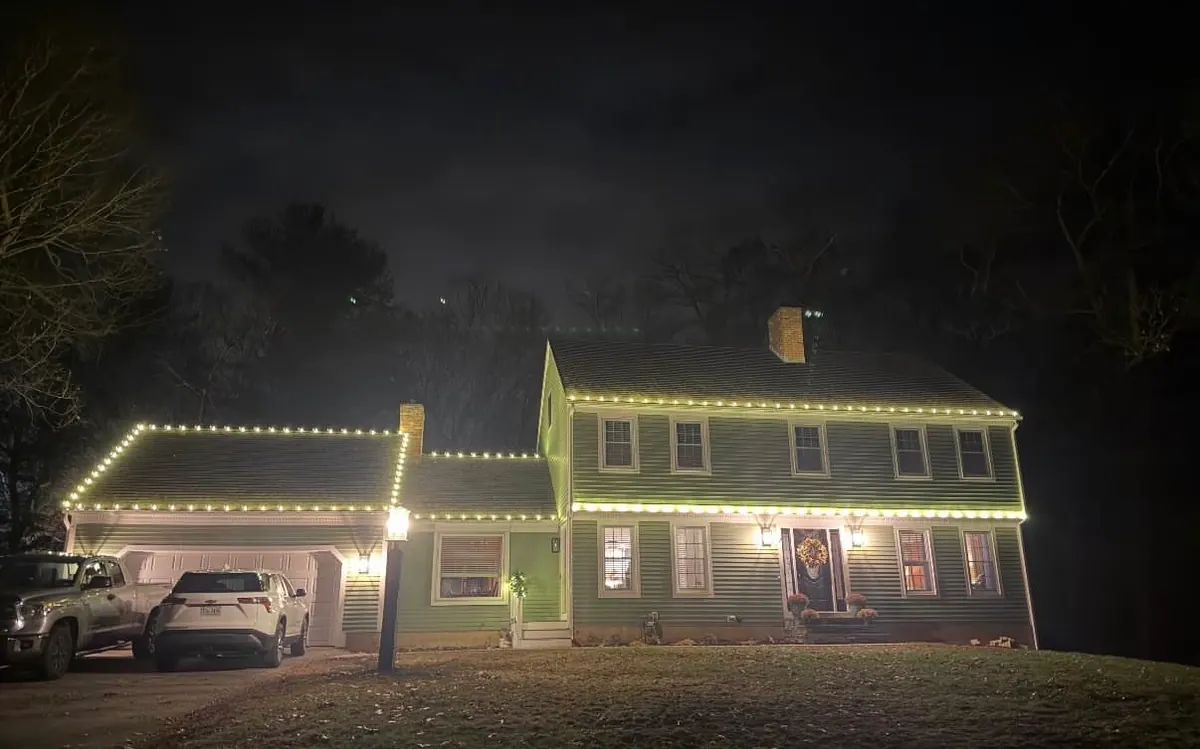
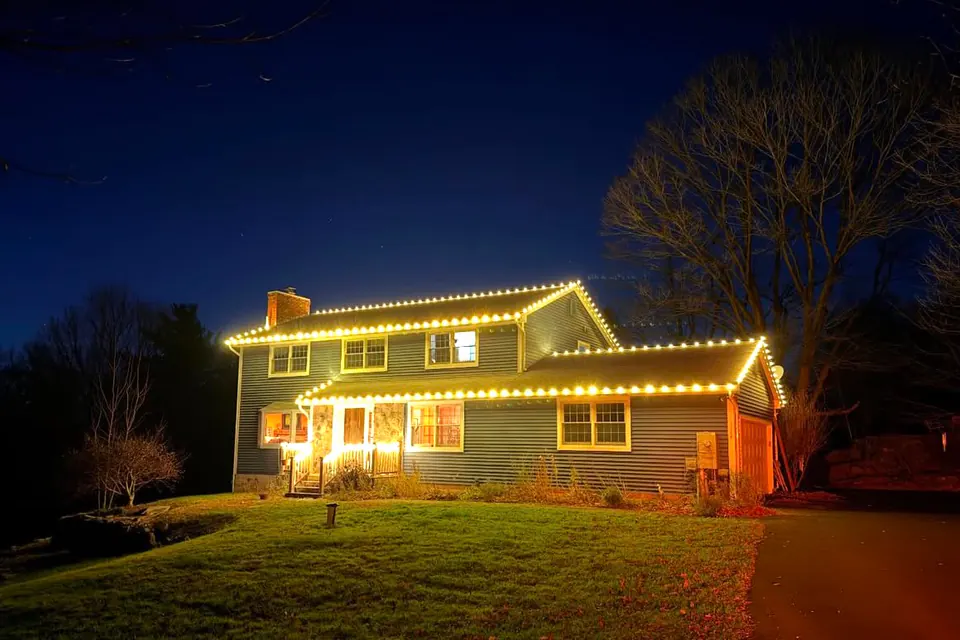
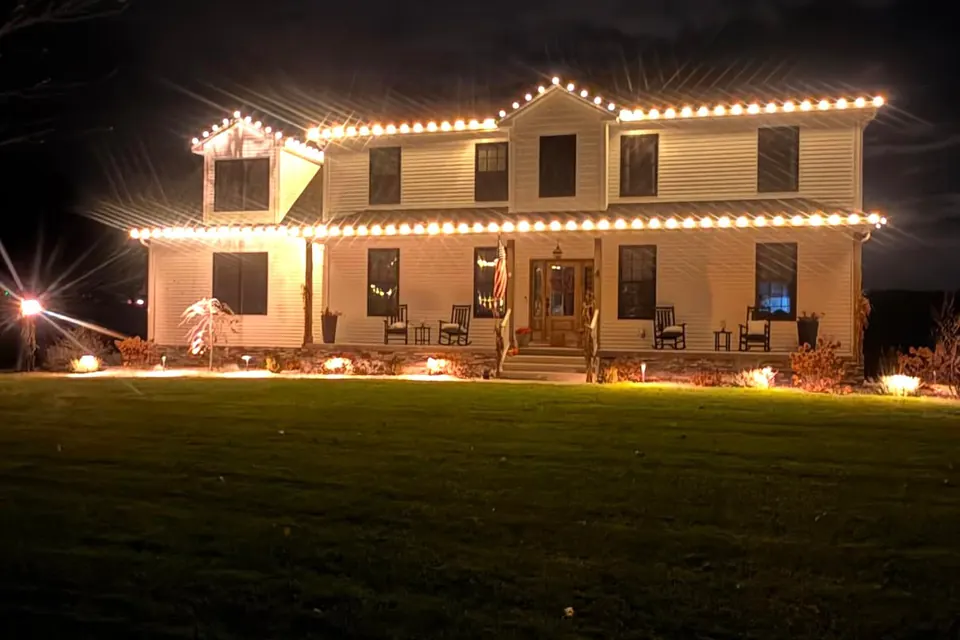
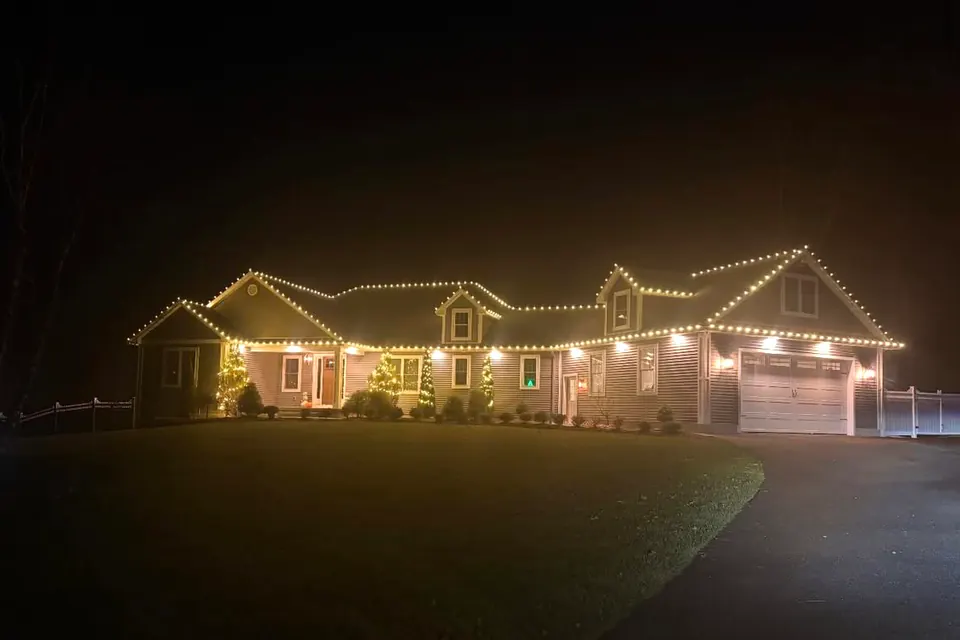
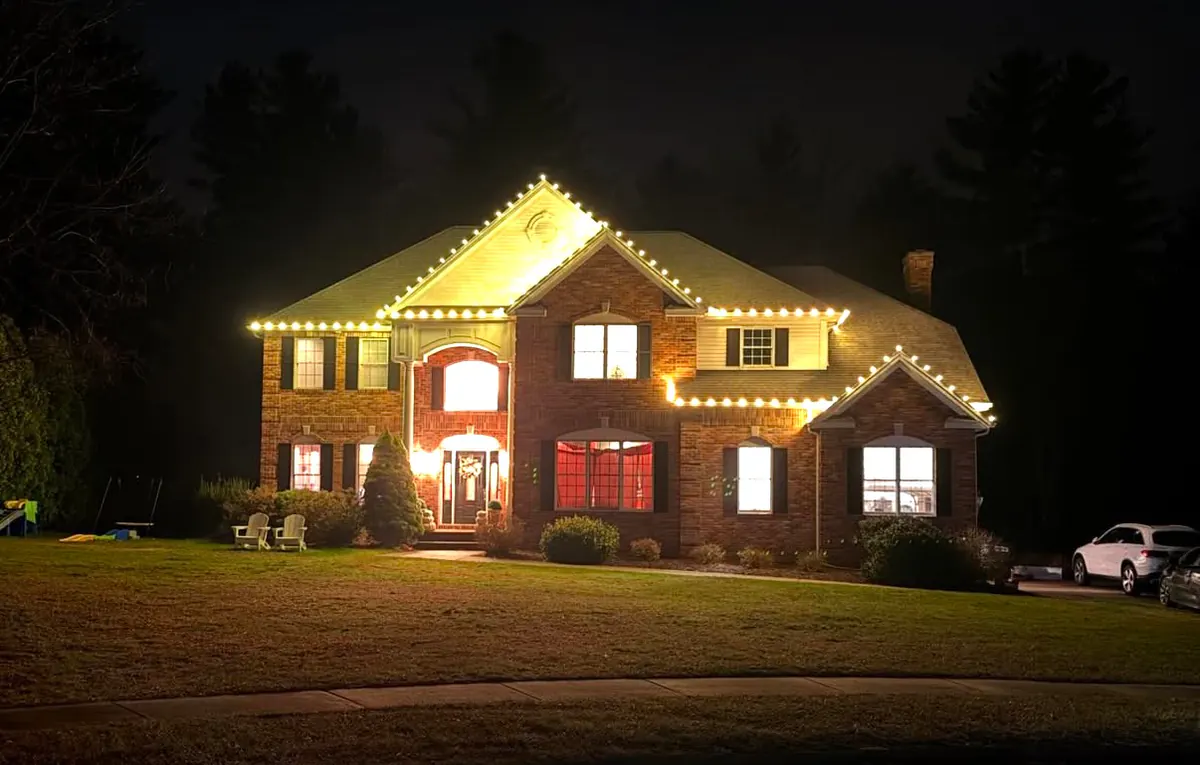
A display is not judged from the front step. It is judged from a car going twenty five miles an hour. So Christmas light design starts at the curb and works back toward the house. We do the same walk in Westfield and Feeding Hills that we do here.
Stand at the street first and find what the house already shows from there
Measure the roof edge, the sloped edges, and the dormer faces, then the bushes and the entry
Find the outlets, because power decides half the layout
Mark what stays dark, and say why, before anything is promised
Five decisions get made on the walk. All five happen before a quote goes out. A house in Suffield or Granby gets the same five.
CoverageRoof only, roof plus ground, or the whole front of the house including the entry.
The lookWarm white bulbs, spaced evenly, the same light on every house we hang.
Spacing and lineWhere the run starts, where it stops, and how the corners turn.
Ground workWhich bushes get wrapped, which stay dark, and what that does to the balance.
PowerWhich outlet feeds which run, and where the cord hides.
Building the Lighting Plan, Piece by Piece
A good plan is mostly subtraction. Almost any house can hold more lights than it should.
The Lines the House Already Gives You
You are not inventing a shape. You are tracing one that is already there. Older center-entrance houses around here are symmetrical, which is easy to light and unforgiving when the line is off.
The gutter edge, the longest continuous line on most homes
The sloped edges that frame the gable
Dormer faces, which read as small repeated shapes from the road
Porch columns, railings, and the door surround
Warm White on Every House We Light
Warm white is what we hang. It is what most people picture when they picture a lit house. We buy it in bulk, so every run matches the next one. Other colors and options can be bought and quoted if you ask.
Warm white reads as the traditional lit house and flatters older trim and brick
The same bulb runs the roof, the entry and the ground work, so the display holds together
Even spacing is what makes a long run look straight from the road
One look, done the same way every time, on every house we light
What the Ground Does That the Roof Cannot
A roofline gives you a line. Bushes and an entry give you depth. A house with only a roofline reads flat from the road, and a house with only bushes disappears after dark. Most plans need both, and the balance shifts with how far back the house sits.
Reading a Display From the Road
Longmeadow sets a minimum front setback of forty feet in every residential district. Its two main residential districts also require 125 to 150 feet of frontage. That distance does two things to a plan. Fine detail stops registering, and a crooked line becomes the only thing anyone notices. Over the line in Suffield the lots run narrow and deep. Houses sit closer to the street, so the entry carries more of the display.
The Entry Is the Second Focal Point
After the roofline, the front door and the garage face do the most work. That is where the eye lands once it finishes the line.
What We Leave Dark
Tall mature trees. The back of the house. A third-story gable with no safe footing. Anything a cord cannot reach without crossing a walkway. Saying it at the walk-around is the difference between a plan and a sales pitch.
Energy Use, and Why It Stopped Being an Argument
LED strands changed the math on running a display all season. LED holiday strands use about 70 percent less energy than older incandescent strands. It is electricity, not the job. It is the reason nobody counts hours on a timer anymore.
Longmeadow, East Longmeadow, Hampden, Wilbraham, Agawam, Feeding Hills, Southwick, Westfield, and Hampden County, Massachusetts. Suffield, West Suffield, and Granby, Connecticut, in Hartford County.
The Walk Is Free and Takes About as Long as a Cup of Coffee
The plan comes first, and the plan is what protects your install date. Booking the walk early is how the good dates stay open.