What Goes Into a Clean Roofline Run
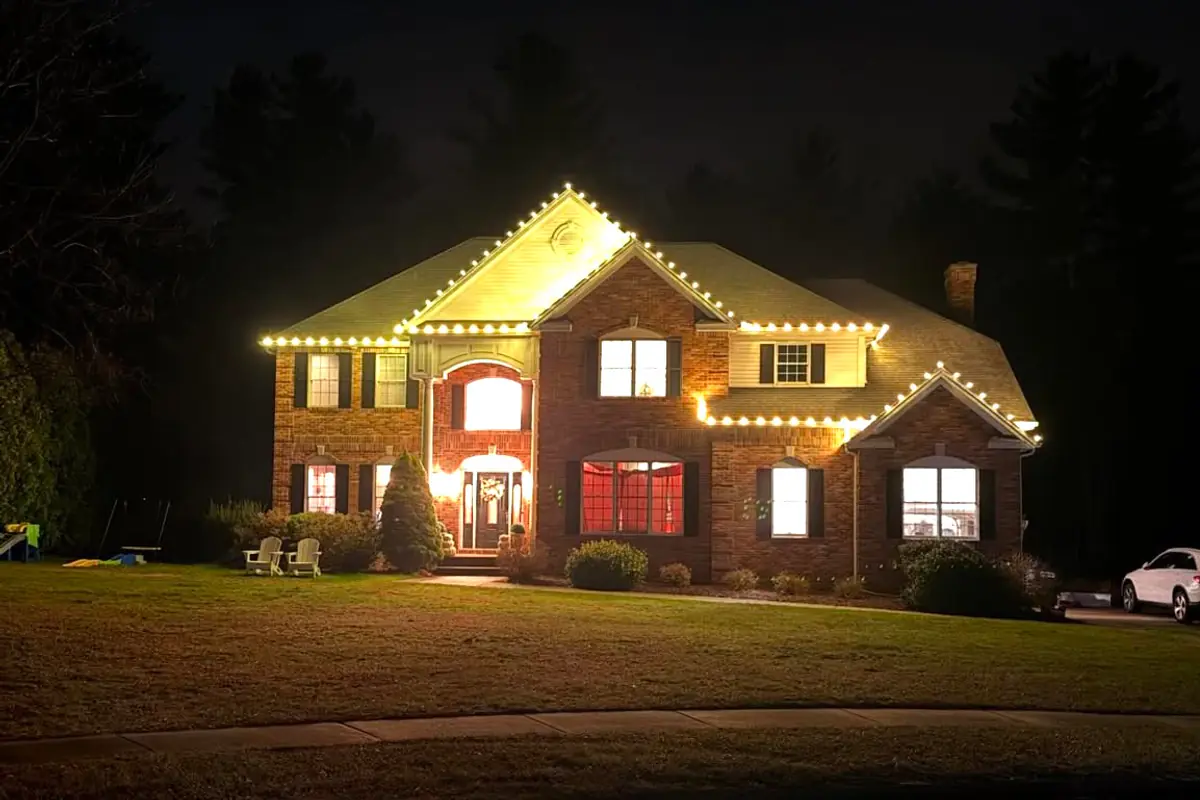
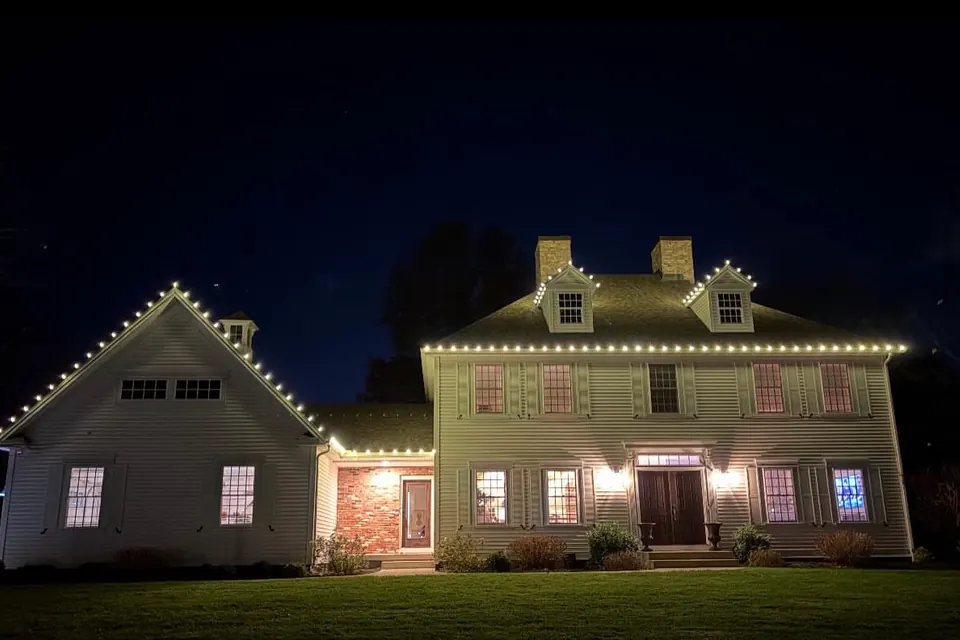
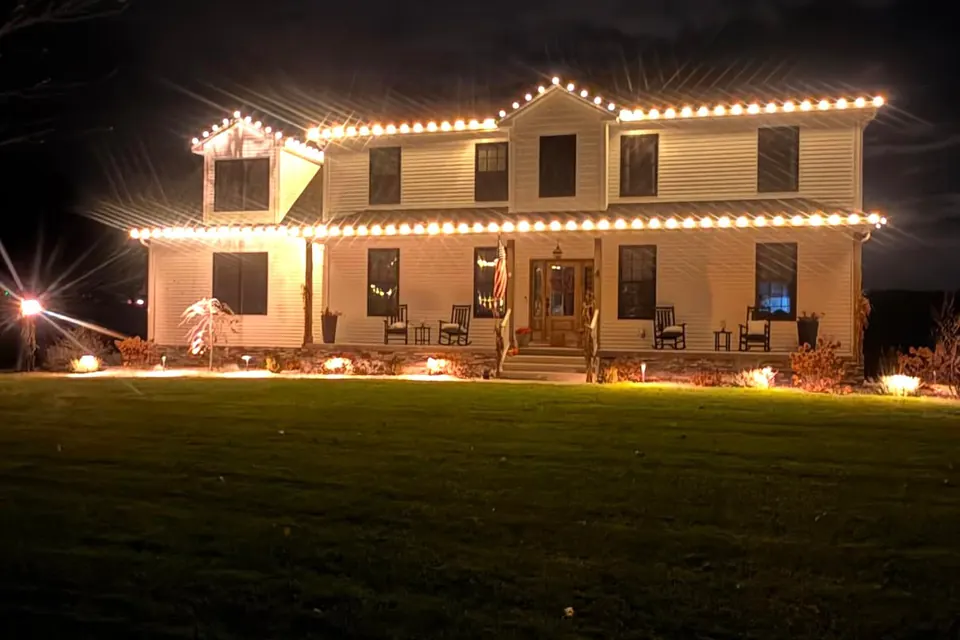
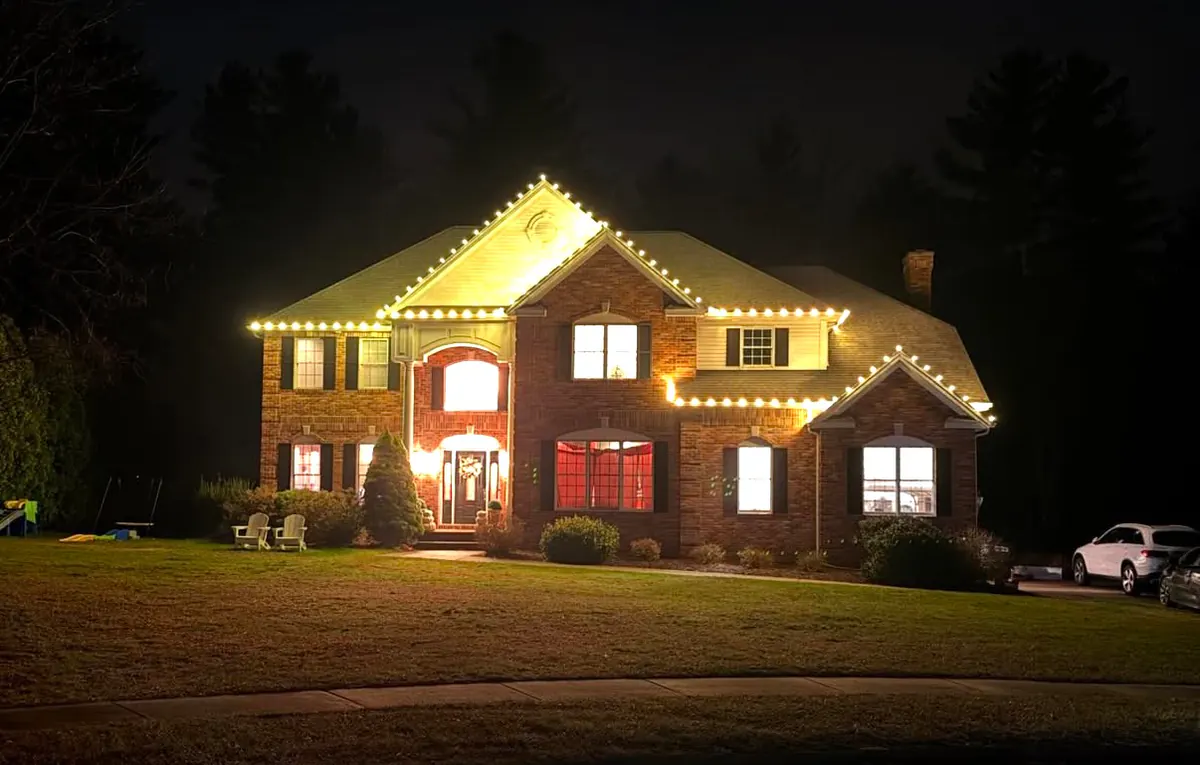
From the street a roofline run is one line of light. Up close it is a bulb, a spacing, a wire, and a clip. Those four choices separate a run that looks built from a run that looks bought.
One more rule governs where a ladder goes. Keep yourself and your equipment at least ten feet from any power line. That is the standing power line clearance guidance for outdoor decorating.
Big Round Bulbs, Spaced Evenly
Big round bulbs stand about two inches tall. That is why the line still reads from a car going past. Small bulbs disappear at that distance.
- Big round bulbs, about two inches tall, the ones people picture on a roof
- The same even spacing held down every line, so the run reads as one line
- Bulbs screw in one at a time, so a single dark bulb is a single bulb
- Smaller bulbs stay off the roof. Those belong in bushes, garland and railings
Cut to Fit Your Roof, Not Pulled From a Box
A string off a store shelf is a sealed unit. Fixed length, bulbs built into the wire, and when it fails you throw the whole run away. Ours is cut to fit your roof, with bulbs that screw in one at a time.
Clips Instead of Fasteners
Clips sit on the gutter lip or slide under the shingle edge. Nothing gets drilled, screwed, stapled or nailed. That matters in January, when the whole run comes off and the trim goes back to looking like trim.
Built to Sit Outside All Winter
Some strings are only made for indoors. Ours are built to sit outside all winter. The wire carries a thicker coat. That is what keeps it from going brittle in the cold or chalky in the sun.
- Every run is planned so no single line carries more than it should
- Roof runs get planned around the outlets the house already has
- Everything that goes outside is made for outside, from the strand to the cord
Which lines get lit is settled first, on a plan designed to your peaks and dormers.
A lit roofline reads better with something under it, so the eye does not stop at the gutter. That is usually shrubs and foundation plantings.